Showing posts with label oz. Show all posts
Showing posts with label oz. Show all posts
Monday, March 16, 2015
Dr Oz Five Food Felons
---the other 200 posts---
 |
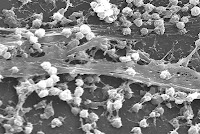
| Biofilms on intestine microvilli |
Dr. Ozs Five Food Felons and Why His Choices Are Unhealthy:
"1) Trans fats raise lousy LDL cholesterol and triglyceride levels, lower your healthy HDL cholesterol level and fuel disease-triggering inflammation." Trans fats are inflammatory and should not be eaten. New labeling has permitted substantial amounts of trans fats to be added to processed foods and still be labelled "No trans fats." LDL blood levels reflect inflammation, but artificially lowering the LDL with statins has no impact on heart disease. Lowering LDL, by lowering inflammation with fish oil and/or repair of gut flora, diet and exercise is effective.
"2) Saturated fat in red meats, poultry skin, full-fat dairy products and palm and coconut oils fuels cancer risk, coronary artery disease, dementia, obesity and diabetes." Linking saturated fats with heart disease, etc. was never supported by medical research. Elimination of red meat, removing skin from chicken, avoiding egg yolks, etc. and replacing them with omega-6 polyunsatured vegetable oils has been a major contributor to inflammation and disease. Full fat milk is the healthful choice, especially for children. The change was dangerous and is being reversed with new emphasis placed on omega-3 fish oils.
"3) Added sugars and 4) sugar syrups cause the proteins in your body to be less functional and age your immune and cardiovascular systems and your joints. Plus, they disrupt your metabolism and contribute to almost every lifestyle-related malady, including some cancers." Oz got this right even though they initially promoted high fructose corn syrup (half glucose/oligos) and its evil and even higher fructose sister agave nectar (all fructose/oligos.) Equally bad, however, are the hyperglycemic starch in breads (including whole grain!) and over cooked pasta.
 |
| Gut flora |
"5) Refined and processed grains dont contain the fiber or nutrients (contained in 100 percent whole grains) that you need to keep the bacteria in your guts happy, glucose levels regulated, immune system strong and digestion running smoothly." Dr. Oz and company fail to understand the basics of vitamins, soluble fiber and gut flora. Grains are not healthy for most people, because of the toxicity of gluten and hyperglycemic starch. Ultra fine milling and fast commercial bread making eliminate the resistant starch. "Whole grain" processed foods just add back the insoluble fiber that is considered toxic, because of its phytic acid content. Grains should just be replaced with whole foods, such as vegetables that contain the soluble fiber that feeds the gut flora that provide all of the needed vitamins and are required for immune system development.
Why Does Dr. Oz Make Health Mistakes?
Dr. Oz has been criticized for promoting foods, supplements, medical treatments, etc. that are not supported by medical research. While that is true, I think that he is just following the general views of the medical industry and simply doesnt know any better. Sadly, most doctors dont have the background to read scientific research papers, let alone their own biomedical literature that is rife with scandals of nonreproducibility and inappropriate industry influence. Doctors find it hard to give valid dietary advice, because nutritionists have false information and celebrity doctors, and their research teams, dont do their homework. The result is the mix of ancient orthodoxy, industry promotion, alternative medicine and unscientific fads that appears in the media. Doctors need a scientific background sufficient to answer the essential question posed to health claims, "Does it make sense?"

Dr Oz on Gut Flora Repair
--- the other 200 posts ---

I am amazed that Dr. Oz and the medical industry can encounter symptoms of dysfunctional gut flora, e.g. constipation, food intolerance, autoimmunity, allergy, that are preceded by antibiotic treatment and not address the compromised species diversity of the gut. The involvement of gut bacteria in immune system function is documented in the biomedical literature. The lasting impact of antibiotics on gut bacteria is known. Then why do Dr. Oz and the rest of the medical industry just recommend probiotics, a half dozen different species of bacteria found in fermenting dairy products (think elephants and giraffes), to repair a decimated gut bacterial community? They seem to be perplexed and ask, "Where is the hippo?"
Generalizations about Gut Bacteria
Each healthy human maintains a subset of a couple of hundred of the couple of thousand different species of bacteria found in humans around the globe. The diverse community in each individual may differ in species, but has approximately the same complement of genes in people sharing the same diet.
- 1-200 different species of bacteria per person
- 1-2000 different species of human gut bacteria
- 1 million different genes among the different bacteria
- Most genes are involved in digesting plant carbohydrates, i.e. soluble fiber: inulin, pectin, fructans, algal sulfated polysaccharides, etc.
- Diet diversity, e.g. the Modern American Diet, reduces the diversity of the gut bacterial community, presumably because the rapid change in foods permits survival of only generalist bacteria that can digest many different foods.
- Simple diets produce gut flora diversity, but only if there is access to diverse bacteria.
- Health may result from diverse gut flora developed from a simplified diet and ample bacterial resources.
- Obesity and other diseases may result from simplified gut flora developed from a changing, complex diet and a sterile environment/isolation.
- Vegan and paleo extremes can lead to healthy gut flora diversity, if the gut bacterial community is permitted to adjust to the diet composition by avoiding rapid changes and providing diverse bacterial sources.
- Meat contains complex polysaccharides, e.g. glycosaminoglycans, such as chondroitin sulfate and heparan sulfate proteoglycans, which are bacterial fodder equivalent to soluble fiber.
- Probiotics are unique bacterial species that do not persist in the gut of adults, but dominate the gut of milk eating babies and stimulate development of the gut and immune system.
- Probiotic bacteria can temporarily provide developmental signals for immune system development that are normally provided by a healthy gut flora.
- Antibiotics cripple gut flora needed for development of the immune system.
- Common medicines have significant antibiotic activity and modify gut flora.
Damage to Gut Flora is Not Repaired by Diet Alone
There is little or no effort being made by the medical industry to develop approaches to repair gut flora damaged by disease, unhealthy diets or medical procedures. This is similar to a surgeon stepping away from removal of a diseased organ without closing the wound. Antibiotics leave a gut flora that will remain permanently damaged without systematic, monitored repair. It might also be suspected that disruption of gut flora by antibiotics and the introduction of large amounts of new foods, such as high fructose corn syrup and vegetable oils may contribute to or cause the modern prominence of obesity. After all, gain or loss of weight changes gut flora, obese individuals have damaged gut flora, and trading gut flora between fat and lean animals, trades weight gain/loss behaviors.
Sources of Bacteria to Repair Damaged Gut Flora
- We must eat new bacteria in order to replace bacterial species lost by antibiotics or unhealthy diets.
- Probiotics -- bacteria that aide gut function, commercially from dairy fermentation
- Fresh vegetables -- bacteria are on the surfaces of plants unless the vegetables are cleaned or cooked
- Fermented foods -- Bacterial growth leading to acid or alcohol production has beed used in the preparation and storage of many foods and provides a rich bacterial resource.
- Environment -- Bacteria are transferred to our hands and face from other people, pets and surfaces, unless hands and the body are continually washed. Sanitizers and frequent washing of hands and surfaces eliminate acquisition of environmental bacteria to repair damaged gut flora. Social isolation and hygiene block repair of gut flora.
- Replacement -- experimental replacement of damaged with healthy gut flora (fecal transplant) has been very effective in curing many diseases without significant risks, but is restricted by the medical industry.
Sunday, March 15, 2015
Dr Oz Vitamins Biofilms
Vitamins supplement enzyme action, but they are produced by gut flora for biofilm communication.
 Dr. Oz and the general biomedical community promote the idea that vitamin supplements or in foods are needed or improve health. Of course, several research studies show that typical multivitamin supplements or the levels of vitamins in "enriched" foods do not provide improvements in health. Since gut flora produce all of the needed vitamins, this should be no surprise. But why do gut bacteria release vitamins needed for the normal functions of the human body?
Vitamins are Enzyme Cofactors
Vitamins are small molecules that bind to particular cellular enzymes and provide functions that cant be provided by proteins. Enzymes are linear strings, polymers, of about a thousand amino acids. The 23,000 human genes code for the sequence of amino acids in as many enzymes. The amino acid strings fold up systematically into three dimensional balls that bring together chemical groups of the amino acids that can catalyze biochemical reactions. The twenty different amino acids in proteins are limited in the scope of their reactions. Binding of some metabolic products, such as vitamins, expands the types of reactions possible. Vitamins are enzyme cofactors. Bacteria can synthesize all of the vitamins needed for metabolism, but humans cant.
Vitamin D is a Hormone
Vitamin D is not a typical vitamin. It is not an enzyme cofactor, but rather it is a steroid hormone that is produced in the skin from cholesterol through the action of ultraviolet light. The production of antibacterial peptides in the small intestines, for example, is a response of intestinal cells to vitamin D. Exposing arms and legs to sunlight produces about 10,000 IU of vitamin D per minute. (Typical supplements contain only 1,000 IU.) Production of vitamin D is reduced by skin pigmentation, sunscreen and inflammation. People exposed to daily sunlight for hours in San Diego, for example, may still be deficient in vitamin D, if their production of vitamin D has been shut down by chronic inflammation, as indicated by typical inflammatory conditions, such as arthritis, allergies, inflammatory bowel diseases, obesity, dental/oral infections, prostatitis, thyroiditis and other autoimmune diseases.
Vitamins are Produced by Gut Biofilms
People with healthy, diet-adapted gut flora, can subsist on very limited diets without vitamin deficiency diseases, because all of the vitamins can be obtained from bacteria growing in films coating the lining of the gut. These biofilms are complex communities of dozens of different bacteria and fungi. The bacteria synthesize polysaccharides in which these and other bacteria and fungi become embedded. The biofilms release vitamins that are taken up by intestinal cells to provide the needs of the body.
Vitamins are Chemical Signals for Biofilm Assembly
Bacteria, such as E. coli, do not form biofilms, if they are just grown at low concentrations on laboratory nutrients. If the concentrations of bacteria become very high, however, the bacteria respond by activating genes that coordinate biofilm formation. Bacteria detect the presence of other bacteria by releasing and detecting chemical signals in a process called quorum sensing. The chemical signals used in quorum sensing and biofilm maintenance are vitamins. Thus, human intestines are adapted to exploit the presence of biofilms and vitamin secretion. Humans need not synthesize vitamins, because they are always produced by gut biofilms as an essential biofilm function.
Antibiotics and Multivitamin Supplements
Antibiotic use is known to disrupt gut flora and produce vitamin deficiencies. Killing off healthy gut biofilms with casual use of antibiotics should be anticipated. The medical industry is remiss, however, in not repairing gut flora after medically mandated antibiotic use. Probiotics can temporarily supply some of the functions of the hundreds of bacterial species in each healthy individual, but they do not replace complex biofilms.
The vitamin production of some of the bacterial species eliminated from the gut by antibiotics can be replaced by vitamin supplements, but supplements may disrupt the normal vitamin/quorum sensing communication and further disrupt biofilms. Thus, vitamin supplements may be unhealthy, if they disrupt biofilms that are necessary for healthy function of the gut-based immune system, which is needed to avoid, for example, allergies and autoimmune diseases.
Major Points about Vitamins, Biofilms and Health
Read more »
Vitamins are Enzyme Cofactors
Vitamins are small molecules that bind to particular cellular enzymes and provide functions that cant be provided by proteins. Enzymes are linear strings, polymers, of about a thousand amino acids. The 23,000 human genes code for the sequence of amino acids in as many enzymes. The amino acid strings fold up systematically into three dimensional balls that bring together chemical groups of the amino acids that can catalyze biochemical reactions. The twenty different amino acids in proteins are limited in the scope of their reactions. Binding of some metabolic products, such as vitamins, expands the types of reactions possible. Vitamins are enzyme cofactors. Bacteria can synthesize all of the vitamins needed for metabolism, but humans cant.
Vitamin D is a Hormone
Vitamin D is not a typical vitamin. It is not an enzyme cofactor, but rather it is a steroid hormone that is produced in the skin from cholesterol through the action of ultraviolet light. The production of antibacterial peptides in the small intestines, for example, is a response of intestinal cells to vitamin D. Exposing arms and legs to sunlight produces about 10,000 IU of vitamin D per minute. (Typical supplements contain only 1,000 IU.) Production of vitamin D is reduced by skin pigmentation, sunscreen and inflammation. People exposed to daily sunlight for hours in San Diego, for example, may still be deficient in vitamin D, if their production of vitamin D has been shut down by chronic inflammation, as indicated by typical inflammatory conditions, such as arthritis, allergies, inflammatory bowel diseases, obesity, dental/oral infections, prostatitis, thyroiditis and other autoimmune diseases.
Vitamins are Produced by Gut Biofilms
People with healthy, diet-adapted gut flora, can subsist on very limited diets without vitamin deficiency diseases, because all of the vitamins can be obtained from bacteria growing in films coating the lining of the gut. These biofilms are complex communities of dozens of different bacteria and fungi. The bacteria synthesize polysaccharides in which these and other bacteria and fungi become embedded. The biofilms release vitamins that are taken up by intestinal cells to provide the needs of the body.
Vitamins are Chemical Signals for Biofilm Assembly
Bacteria, such as E. coli, do not form biofilms, if they are just grown at low concentrations on laboratory nutrients. If the concentrations of bacteria become very high, however, the bacteria respond by activating genes that coordinate biofilm formation. Bacteria detect the presence of other bacteria by releasing and detecting chemical signals in a process called quorum sensing. The chemical signals used in quorum sensing and biofilm maintenance are vitamins. Thus, human intestines are adapted to exploit the presence of biofilms and vitamin secretion. Humans need not synthesize vitamins, because they are always produced by gut biofilms as an essential biofilm function.
Antibiotics and Multivitamin Supplements
Antibiotic use is known to disrupt gut flora and produce vitamin deficiencies. Killing off healthy gut biofilms with casual use of antibiotics should be anticipated. The medical industry is remiss, however, in not repairing gut flora after medically mandated antibiotic use. Probiotics can temporarily supply some of the functions of the hundreds of bacterial species in each healthy individual, but they do not replace complex biofilms.
The vitamin production of some of the bacterial species eliminated from the gut by antibiotics can be replaced by vitamin supplements, but supplements may disrupt the normal vitamin/quorum sensing communication and further disrupt biofilms. Thus, vitamin supplements may be unhealthy, if they disrupt biofilms that are necessary for healthy function of the gut-based immune system, which is needed to avoid, for example, allergies and autoimmune diseases.
Major Points about Vitamins, Biofilms and Health
- Health requires gut biofilms to supply vitamins and control the immune system.
- Biofilms produce and use vitamins for maintenance of biofilms.
- Eating vitamins may disrupt normal biofilm formation.
- Antibiotics disrupt gut biofilms and cause vitamin deficiencies and immune system disfunction.
- Biofilm repair requires ingestion of missing bacterial species (150 total) and may be inhibited by excessive hygiene.
Subscribe to:
Posts (Atom)